Quick answer
Stickhandling trainers and stick weights both work - as constraint tools, not magic. A trainer forces clean puck paths around obstacles; a stick weight makes your normal stick feel feather-light afterwards. Use them in short, focused doses (the trainer for drill structure, the weight for 2-3 warm-up minutes) and the gains are real. Expect them to replace practice, and you will be disappointed.
Key takeaways
- Trainers give unstructured practice a shape: fixed obstacles, repeatable patterns, measurable times.
- A weighted stick overloads forearms and wrists; the contrast when it comes off is where hands feel faster.
- Keep weighted work short - long weighted sessions groove slow, muscled mechanics.
- Both tools shine for players who get bored dribbling freely; structure keeps them training.

Watch: expectations vs reality
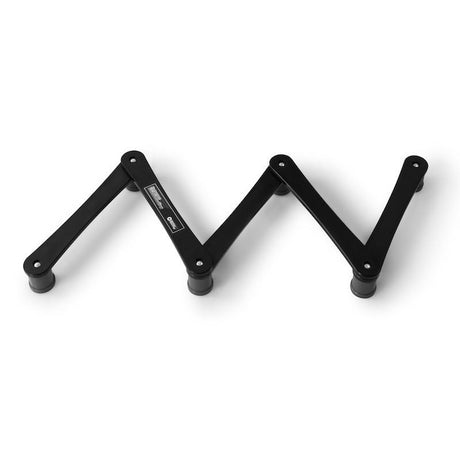
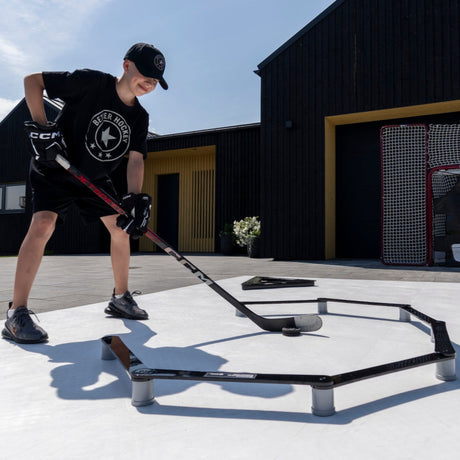
The video is honest about it: the trainer will not do the reps for you. What it does is make every rep the same shape - around the obstacles, through the gates - so progress is comparable day to day. The Stickhandling Trainer is the starter; the Trainer Pro adds configurations for advanced patterns.
Watch: 5 days with a stick weight
The 5-day experiment in the video matches what we see in training: after short daily weighted sets, the normal stick feels dramatically lighter and hands move freer. The protocol that works: 2-3 minutes of weighted dribbling at the start of each session with the Pro Stick Weight, then take it off and do your real work. A stickhandling ball keeps the surface forgiving.
A week that combines both
- Daily: 2 min weighted free dribble (warm-up), then weight off.
- Mon/Wed/Fri: 10 min trainer patterns - time each lap, beat yesterday.
- Tue/Thu: 10 min free-style: toe drags, fakes, eyes up - creativity day.
Full hand-speed method in the quick hands hack.