Quick answer
Balance training is the quiet foundation under skating, shooting and puck protection — and a balance board trains it in minutes a day, indoors, year-round. Start with two-foot stance holds, add squats and stickhandling on the board, and progress to passing while balancing. Ten minutes, three or four times a week, is enough to feel it on the ice.
Key takeaways
- Stronger balance shows up everywhere: deeper knee bend, steadier battles, harder shots off one leg.
- The board makes core and ankle stabilizers work constantly — no reps to count, just time on the board.
- Combining balance with stick skills (stickhandling or passing on the board) is where hockey transfer happens.
- Honest note: a balance board is a supplement, not a replacement for skating or shooting practice.

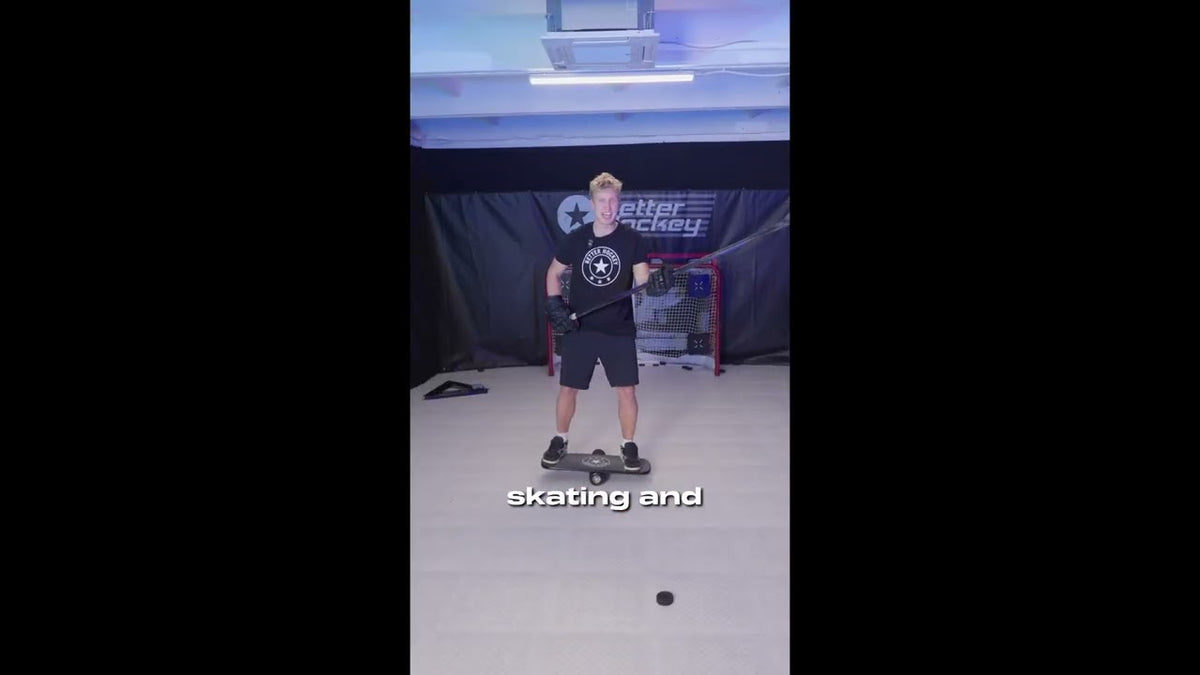
Watch: first look at the new board
A 10-minute starter routine
- Stance holds — 2 min. Hockey stance on the board, eyes up. Goal: 30 seconds steady without the edges touching down.
- Slow squats — 2 min. Sets of 5 slow squats. Depth matters less than control.
- Stickhandling on the board — 3 min. Narrow dribble with a ball while balancing. Start slow; speed comes.
- Passing on the board — 3 min. Partner or rebounder passes while you hold your stance. This is the game-like level.
Progression
Week 1–2: holds and squats only. Week 3–4: add stickhandling. Week 5+: passing, one-leg holds, and timed challenges. Keep a wall or chair within reach for the first sessions — everyone steps off at the start, and that's fine.
The Extreme Hockey Balance Board is built for exactly this: stick-friendly height and a deck wide enough for a hockey stance. It pairs naturally with a Triangle Passer for the passing level.